
SHRINE OF BAHAUDDIN ZAKARIYA
A Centre of Sufi Heritage in Multan
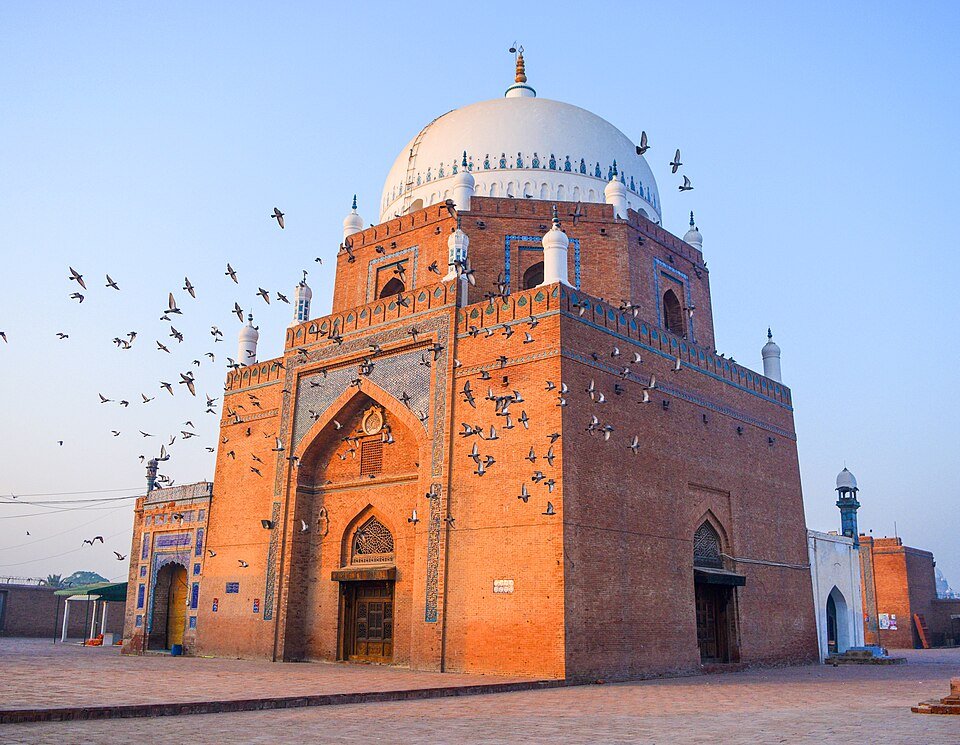
The Shrine of Bahauddin Zakariya is a 13th-century shrine located in Multan, Punjab, Pakistan. The tomb is dedicated to the Sufi mystic Bahauddin Zakariya, of the Suhrawardiyya order of Sufism. It considered to be one of the most important Muslim shrines in the wider Punjab region, and is the prototype for Multan’s classical architectural style.
Historical Overview
In keeping with Sufi tradition in Punjab, the shrine’s influence is augmented by smaller shrines spread throughout the region around Multan. These secondary shrines form a wilayat, or a “spiritual territory” of the primary shrine. As home to the primary shrine, Multan serves as the capital of Bahauddin Zakariya’s wilayat. The shrine’s wilayat is noted to border the spiritual territory of the Shrine of Baba Farid, based in Pakpattan.
Spiritual Importance
The shrine continues to welcome devotees and visitors seeking reflection, prayer and connection with Multan’s spiritual heritage. Visitors are encouraged to experience the site with respect and sensitivity.
Visitor Guidelines
Dress modestly and respectfully
Follow instructions from site custodians
Remove footwear where requested
Avoid disturbing worshippers
Ask before photographing people
Keep noise to a minimum
Explore the Gallery
View architectural details, tile patterns, historic views, the surrounding precinct and changing light across the monument.
The Scared Interior
The shrine was built in 1262 before the death of Zakariya in 1268. Unusual for a dervish, the structure was paid for at the expense of Bahauddin Zakariya – highlighting his unique financial independence. Dara Shikoh unsuccessfully attempted to win the loyalty of Multan’s citizens by donating 25,000 Rupees to the shrine following his defeat by his brother at the Battle of Samugarh in 1658.
The shrine’s sajjada nashin, or hereditary caretaker, Makhdoom Mahmud assisted British forces against Sikh forces during the Siege of Multan in 1848. The shrine’s cupola and part of its upper tier were damaged during the siege by British cannonballs, but were repaired soon afterwards.
ARTISTIC HERITAGE
“The interior woodwork and tile mosaics represent a synthesis of local Multani craftsmanship and Central Asian architectural influences.”
Architecture
The mausoleum is built of brick, and is the earlier building to be decorated with glazed blue tiles, which later became a typical style of Multan and south Punjab. The use of blue tiles reflects the influence of immigrant architects from Central Asia, who were active in the region in the 13th century. A spacious brick verandah with a painted wooden ceiling was added to the shrine in 1952. Large wooden doors provide entry into the inner sanctum of the shrine from the veranda.
The shrine is surrounded by hundreds of secondary graves belonging to descendants and devotees of Bahauddin Zakariya.
MONUMENTAL FORM
The shrine’s strong geometric massing gives it a distinctive presence within Multan’s skyline.
DOME STRUCTURE
Its dome creates a powerful visual profile visible from across the historic precinct.
TECHNICAL SPECIFICATIONS
Structure:
Three-tiered octagonal base, 15-
meter diameter.
Materials:
Red brick bounded by black
shisham wood beams.
Defense:
Sloping walls with military-style
crenellations and 8 buttressed
towers.
Crown:
White dome capped with an ‘amalaka’ style structure.
World Heritage Status
Currently recognized on the UNESCO World Heritage tentative list for its exceptional universal value.
Book a heritage walk
Guided walks cross historic gates, sacred shrines, and narrow bazaars. Stories hide in the walls and wait in the streets.
OPERATIONAL SCOPE
What We Do
Promote awareness of Multan’s heritage
Support conservation and documentation
Develop visitor information and heritage routes
Highlight traditional crafts and living culture
Encourage responsible cultural tourism
Share research and educational material
Promote community participation
Preserve stories, memories and cultural knowledge
Our Impact
By connecting cultural heritage with tourism, research, education and community
engagement, Walled City Multan aims to strengthen public appreciation for the historic city and encourage its long-term protection.